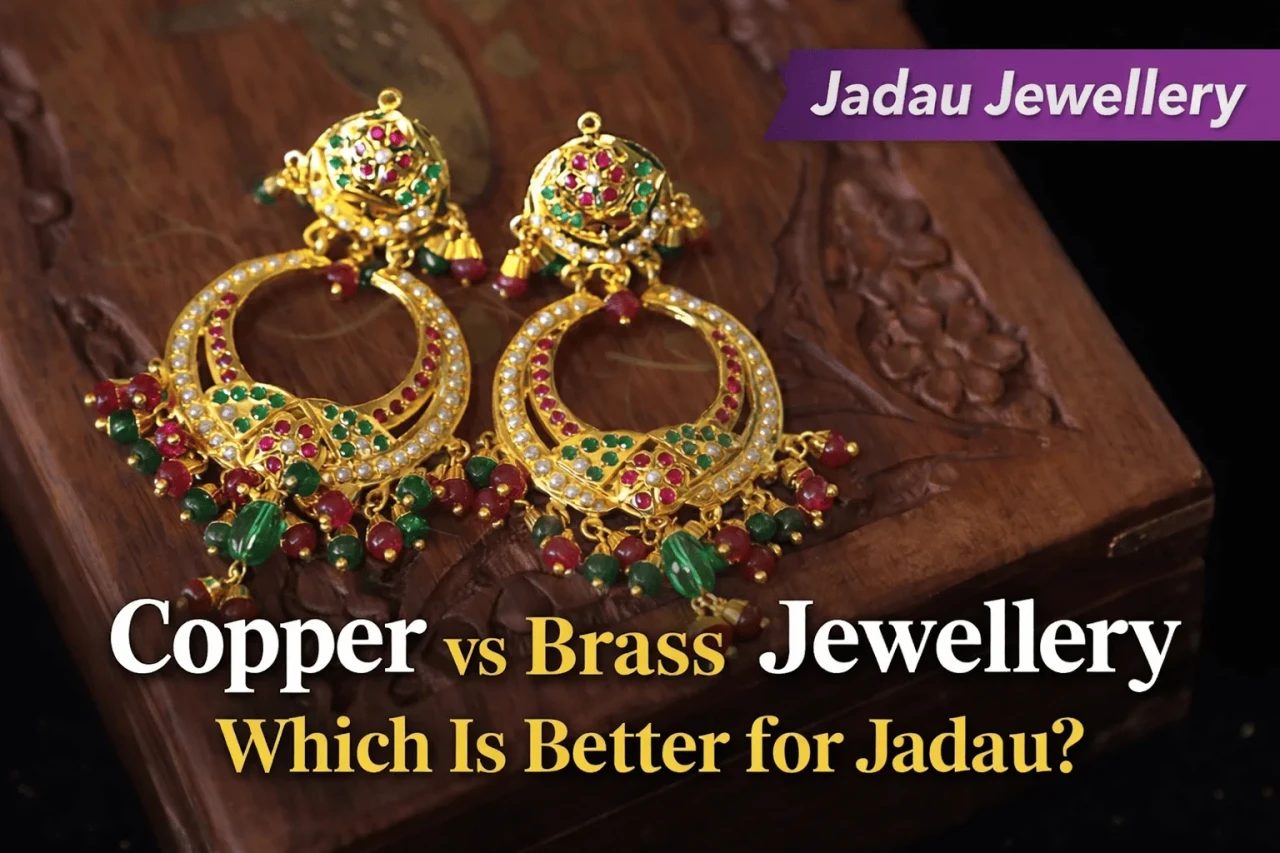
When buying artificial jadau jewellery, most people focus on design and price. Very few ask the question that actually determines how the jewellery will age: what’s the base metal?
Copper and brass are the two most commonly used base metals in artificial jadau jewellery. While they may look similar at first glance, their performance under 24k gold plating is very different.
Why the Base Metal Matters in Jadau Jewellery
Traditional jadau jewellery is known for its richness, weight, and depth of finish. The base metal directly affects how well the gold plating bonds, how the jewellery feels on the skin, and how long it maintains its colour.
This is why premium artificial jadau brands carefully choose copper over cheaper alternatives.
Copper-Based Jadau Jewellery: The Traditional Choice
Copper has been used in jewellery-making for centuries. In artificial jadau jewellery, copper offers a smooth surface that allows 24k gold plating to sit evenly and adhere better.
The result is a warmer gold tone, richer finish, and a piece that looks closer to real jadau craftsmanship.
Image suggestion: Close-up of copper-based jadau jewellery showing depth and detailing

Premium copper-based artificial jadau jewellery - explore more at www.jaditt.in
Brass-Based Jadau Jewellery: Where Compromises Begin
Brass is often used to reduce costs and overall weight. While it allows faster production, it doesn’t hold gold plating as effectively as copper.
Over time, brass-based jadau jewellery may lose its shine faster, especially in humid conditions or during long wear.
Weight, Feel, and Wear Experience
One of the easiest ways to tell the difference is by holding the jewellery. Copper-based pieces feel heavier and more substantial, closely matching the traditional jadau experience.
Brass jewellery often feels lighter and lacks the solid presence expected from ceremonial jadau designs.
Gold Plating Durability: Copper vs Brass
Copper allows thicker and more stable 24k gold plating. This means slower fading when proper care is followed.
Brass, on the other hand, tends to react faster once the top layer weakens, making fading more noticeable.
What Serious Buyers Should Actually Look For
- Copper as the base metal
- Even, warm gold tone (not pale yellow)
- Heavier feel with fine detailing
- Clear care instructions from the seller
Why Brands That Use Copper Cost Slightly More
Copper is more expensive than brass and requires better craftsmanship. Brands using copper invest more in plating quality and finishing.
This is why well-made copper-based artificial jadau jewellery holds its look longer when compared to mass-produced alternatives.
Carefully crafted copper-based jadau jewellery collections can be explored at www.jaditt.in.
Final Verdict: Which Is Better for Jadau?
If you value finish, durability, and a traditional appearance, copper is clearly the better base metal for artificial jadau jewellery.
Brass may work for occasional, budget-focused pieces, but for jewellery meant to feel rich and age gracefully, copper remains the superior choice.

.webp)